Vietnamese AI PhD born in 1992 leaves U.S. tech "giant" to become the youngest Director of a division at one of Vietnam's Top Banks
Pham Hy Hieu’s move to Techcombank comes at a time when the bank is positioning AI as a core strategic focus for the period ahead.

Born in 1992, Pham Hy Hieu is an alumnus of the High School for the Gifted at Vietnam National University, Ho Chi Minh City. He won a silver medal at the International Mathematical Olympiad in 2009. In 2011, Hieu received full-ride scholarships from five of the top universities in the United States and chose to study Computer Science at Stanford. He graduated with honors in 2015 and was awarded the Ben Wegbreit Prize for the best honors thesis of his class.
Immediately after graduation, Hieu received job offers at the same time from Microsoft, Facebook, and Google. Prior to that, he had once been rejected by Google and wrote a response letter pointing out what he saw as unreasonable aspects of the company's hiring policy. In 2016, on his third try, Google proactively invited Hieu to join a project developing neural network applications at Google Brain, and this time he accepted.
Instead of taking offers from big tech corporations, Hieu chose an academic path. He applied for a PhD at Carnegie Mellon University (CMU) and was awarded a 5-year research fellowship. Starting in 2017, through a joint program between Google and CMU, Hieu became the first PhD student to receive full funding for tuition and computing infrastructure from Google Brain. This allowed him to pursue his PhD at the Language Technologies Institute at CMU while also working as a full-time employee at Google.
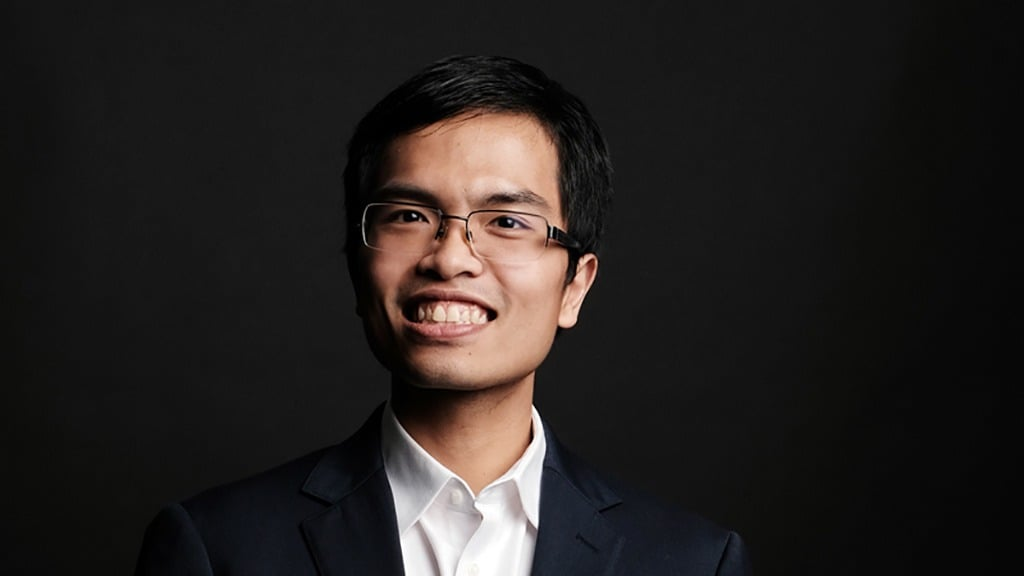
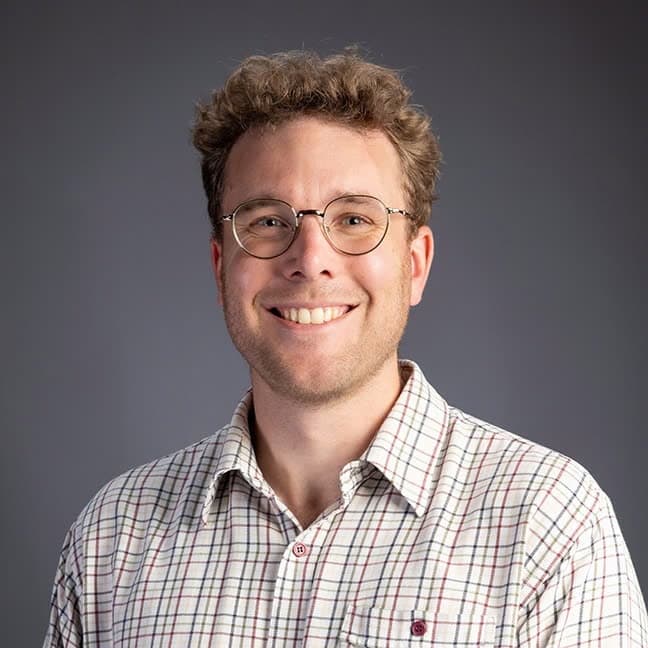
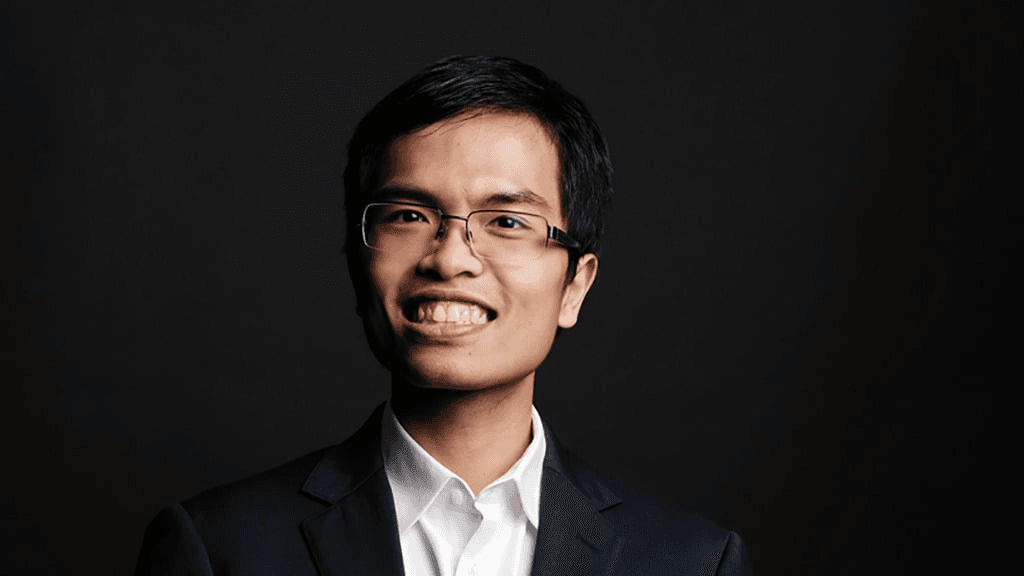
Dr. Pham Hy Hieu. Photo: VNU-HCM
One of his notable projects was using AI to solve discrete optimization problems. Google applied this work to reduce AI model training costs by thousands of times — from requiring 400 computers running continuously for one month down to just one computer running for one day. In 2019, Hieu was named in Forbes Vietnam's 30 Under 30 list. By 2021, at age 29, he successfully defended his PhD thesis in Machine Learning and Computational Linguistics, with international scientific publications that have received thousands of citations.
From 2021 to 2023, alongside his work at Google Brain, Hieu also served as an Adjunct Associate Professor at the Department of Electrical Engineering, National University of Singapore. He later moved to Augment Computing from 2023 to 2024 before joining xAI, Elon Musk's artificial intelligence company, in August 2024. There he directly worked on optimizing the attention mechanism for the Grok-3 model. Shortly after, Hieu moved to OpenAI, one of the most intensely competitive AI research labs in the world.
But the work intensity at leading AI labs came at a cost. In early 2026, Hieu publicly announced his decision to leave OpenAI, sharing that he was burnt out and that his mental health had been severely affected after a prolonged period of high-pressure work. He decided to return to Vietnam, closing a chapter of more than a decade working with major U.S. tech corporations.
After returning to Vietnam, Pham Hy Hieu was invited by Techcombank to take the role of Director of the AI Transformation Division, a move that surprised many in Vietnam's tech community.
According to Techcombank's financial report, the appointment took effect on May 19, 2026. Pham Hy Hieu is also the youngest member of the bank's leadership team. He is currently also a judge and mentor for Season 2 of the "AI in Practice" competition.
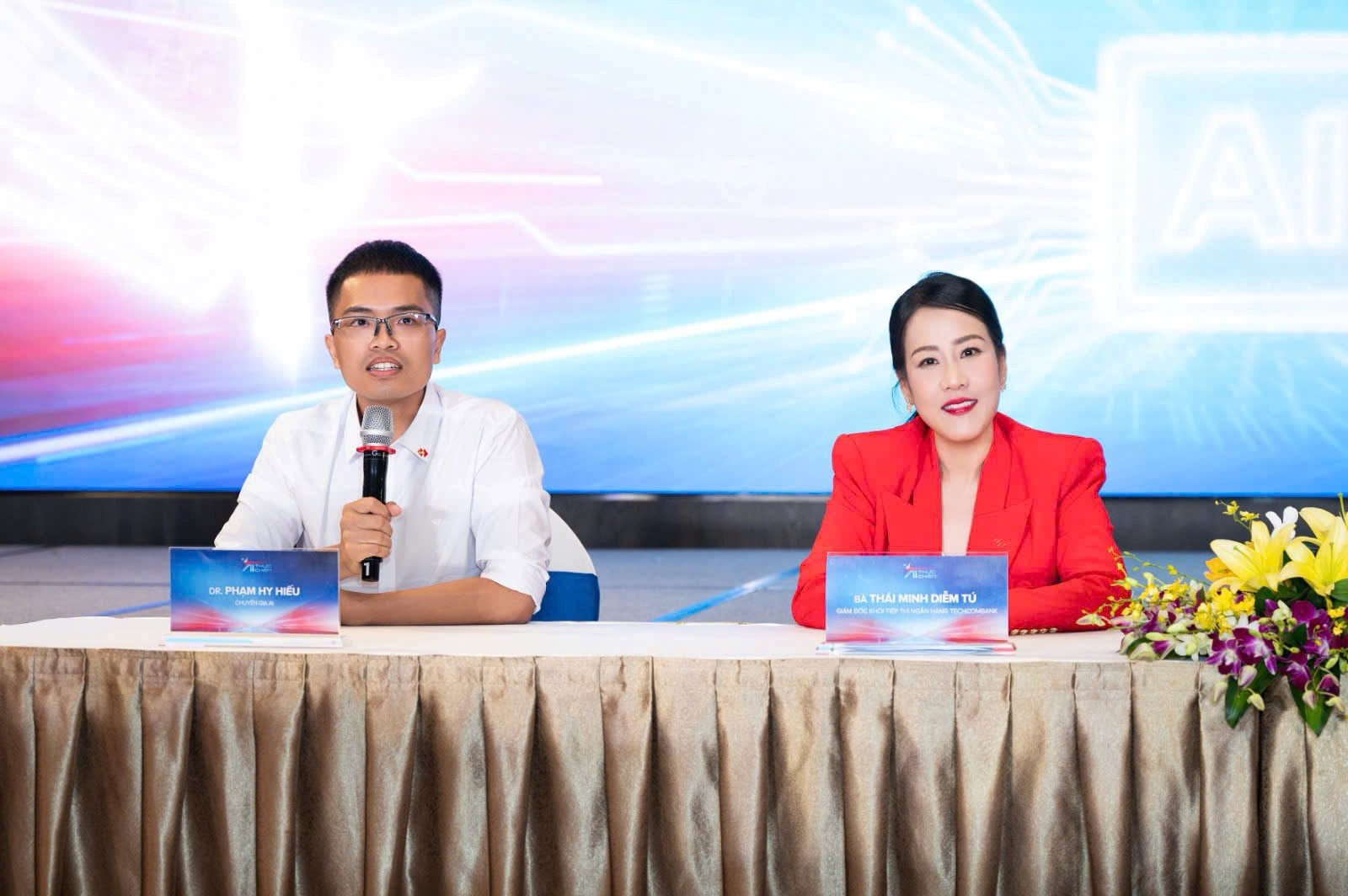
Dr. Pham Hy Hieu at the press conference launching Season 2 of the "AI in Practice" program.
Hieu's arrival at Techcombank comes at a time when the bank sees AI as a strategic focus going forward. Techcombank CEO Jens Lottner has shared that AI will fundamentally change the way the bank operates and is managed. Day-to-day operational activities will no longer be carried out by humans but will be transferred to virtual agents. At that point, the human role will shift toward designing business models, supervising and controlling machines, and continuously innovating to find new solutions for customers.
Sources: CafeF